01 WHERE IT STARTED
One lesson I still think about
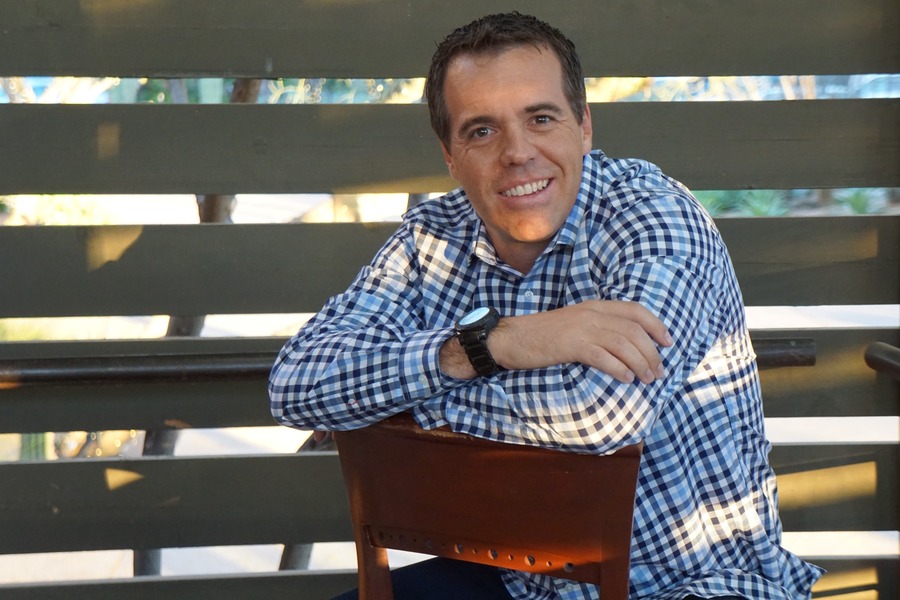
I grew up in Central Oregon, in a family where psychology was more or less the family business. My dad was a psychiatrist and my mom was a psychiatric nurse practitioner. I knew I wasn't going to follow them into therapy, and they wisely advised me to steer clear of any medical profession. What I did have was a calling to teach and help people. I wanted to find a way to work with people who were already doing well and help them do even better.
I'm an athlete and very competitive, and growing up I played a lot of different sports. Tennis became my main focus, and I committed to the game with a serious goal of earning a national ranking as a junior. Along the way I discovered how much I loved coaching, and I started teaching tennis at 15. By 18 I was running clinics at a local club. One morning only one person signed up for the clinic, a man from out of town who was visiting for the week. When we both got to the court, he looked me up and down and said, "You look awfully young to be the head pro here." I felt about two inches tall.
He was definitely a better player than I was and a former teaching pro himself, and he made it clear he just wanted to hit, not take a lesson from a kid. So we hit. A few minutes in, I noticed he was in the middle of reworking his backhand. At the water break I asked if he was open to an idea. He was, and before long we'd shifted into a full lesson, drilling ball after ball to groove the new stroke. By the end of the hour he was drenched in sweat, worn out, and grinning. He handed me a big cash tip and said, "This was one of the best lessons I've ever had. You're really good at this." He booked me again later that week.
I still think about that morning. I didn't win him over by proving anything. I paid attention to the details and helped him with one simple change that made a real difference. That's still most of the job.
02 FROM ATHLETES TO OWNERS
If coaching works for athletes, why not owners?
I studied psychology at UC Santa Barbara, planning to become a sports psychologist and continue my work with athletes on the mental side of their game. After college I moved to Arizona as a step toward the East Coast, where I hoped to align with the top tennis academies and get my foot in the door with the pros. In my research and conversations with a few friendly advisors, I got an idea that steered me in a slightly different direction: business owners could use the same kind of performance coaching athletes get. It wasn't a common idea at the time, but it made perfect sense to me. If coaching works for athletes, why not make it work for business owners? I researched the few coach training programs that existed, enrolled in Coach U, the world's largest and most extensive at the time, and began working with my first clients in 2000.
It didn't start smoothly. My first client was a friend, and when I told her I'd need to charge her a dollar a month to make it official, she fired me before we'd even started. A few weeks later I drove to my first networking meeting, sat in the parking lot, and drove back home. I never even made it in the door. For years I supplemented my income by tending bar at night while I learned how to actually do this and earn a real living at it.
I got better at it, and a lot of that came from the number of conversations I was having with owners about the problems they were facing. A problem one owner was dealing with for the first time was often the fourth time I'd talked it through that week. It wasn't that I was an expert. I was just getting more chances to work through the same issues than most people ever get.
After a couple of years of "practice," I partnered with a small consulting firm and got deeper training, coaching, and experience in the fundamentals of how a business actually operates and grows. That built on what I already knew about people and psychology, and it taught me a lesson I still carry: businesses aren't as unique as they seem. They all run on the same operational fundamentals.
04 THE QUESTION THAT CHANGED HOW I COACH
Not every problem moves the needle
Not too long ago I started noticing something uncomfortable. My clients were happy and liked working with me, and we were solving real problems: focus, planning, hiring, building systems, and managing the team. But a lot of their businesses still weren't growing.
I had to ask myself some hard questions. Why am I not seeing better results? Am I really being a good coach? I thought I was coaching well, but I wasn't making the level of impact that was needed.
When I dug in, a pattern showed up. Owners would spend months, sometimes years, working hard to solve a pressing problem, fix a broken process, or turn around the culture in a department. When it was done, they had a shiny new or repaired part of the business, but no significant change in growth. All that work and all that effort, and sometimes the business actually shrank.
I also noticed that the owners who were growing were working on their most pressing problem, just like everyone else. The difference was that their most pressing problem happened to be a needle mover. That usually wasn't by design. It just happened that way.
The biggest lesson from all these years is that not every problem or pain an owner feels is going to produce growth once it's solved. That's the pattern that keeps so many owners running like a hamster on a wheel: a lot of effort and no real progress.
That's when I realized how much it matters that we're working on the right things at the right time.
05 WHAT I SEE IN OWNERS NOW
Letting go without crashing
Most of the owners I work with run successful businesses. They're good at what they do, and the way they built the business is exactly why it got this far. It's also most of the reason it's stuck. You've probably heard this before, but the approach that got you here won't necessarily get you to the next stage.
You've probably even realized you're the bottleneck. You might be. But telling an owner to stop being the bottleneck is like telling a kid learning to ride a bike to just balance. It names the problem without giving you any feel for what to do about it. My work is helping you evolve out of the bottleneck and let go the right way, so nothing crashes when you do.
Too many times I've seen owners "delegate," or really abdicate. They're trying to get out of the middle. The idea is good, but the tactics are wrong, and they end up paying a price for it. You don't have to do it that way. Letting go of the wheel is required for growth. So is doing it without crashing the vehicle.
06 WHAT IT'S LIKE TO WORK WITH ME
A partner, not a playbook
One client put it better than I can: "Troy is really helpful because he gets business, he gets psychology, and he gets me."
I'm not a boot camp sergeant, and I won't hand you a 12-step playbook and say, "Do what I did and you'll be rich."
I will partner with you. I will get to know you and your team and understand the dynamics and nuance from an outside perspective. I'll give you feedback on what's happening and feed forward on what's next, so you can make good decisions at the level you need. I will hold the space for excellence for you and your team.
I will be the person you call when you're facing a tough decision or a key personnel move, or when you're ready for the next stage and don't know how to get there. And I'll be the first one you want to tell about your next big win.
07 OUTSIDE OF WORK
A little bit country, a little bit country club
I'm a husband and a new dad. I come from five generations of cattle ranchers, so yes, I spent a good part of my childhood chasing cows, though I'm no cowboy. I love fishing, camping, hunting, and getting my truck stuck in the mud off road. I'm a music lover and will join you for a live concert anytime. I water skied competitively at UCSB, and these days I feed my competitive nature on the golf course and run a local golf league that's been around for more than 30 years. If you're ever around Scottsdale and want to hit the links, just let me know. Someone once described me as a little bit country and a little bit country club, and that's about right. The people closest to me will tell you my stories run long and usually have a good point. They're probably right about that too.